
Skip to content

Service & Support

What happens after we leave

Most installers stop at commissioning. We run a monitoring platform that watches our customers' systems through the day, we chase manufacturers and utilities on their behalf, and our maintenance terms are written into the agreement you sign rather than invented for a web page.

Monitoring

You should hear about a fault from us, not from your bill

Customer systems are collected automatically from the manufacturers' clouds on a four-hourly cycle. When a plant stops producing against its own baseline, or an inverter reports a fault, an alarm is raised and an email goes out.

700+
customers served since we started

Two decades of installations, service calls and repairs — 24 of them are live on our monitoring platform today, and that number grows every month.

a day, at four-hour intervals

Production and device faults are checked through the day rather than once a month, so a fault is usually known about the same day it happens.

142
device faults picked up so far in 2026

Between January and September. Each one raises an email — up to three times, then it stops repeating so a standing fault does not bury the new ones.

18
distinct fault conditions recognised

You are told the battery voltage is too low or the inverter has tripped, not merely that something is wrong.

What monitoring does not do

It is tuned to catch a system that has stopped or thrown a fault. A system quietly producing less than it should — a dirty array, a shaded string, a panel degrading — is caught at the annual inspection or by reading the weekly report, not by an alarm the same day. We would rather tell you that than imply we see everything.

A weekly production report, and alarms that do not wait for it

Every Sunday, customers on our monitoring receive what their system produced that week, that month and that year, so a bad month is visible as a number rather than a suspicion. Faults do not wait for the report — they are emailed when they happen.

If your system is on our platform and you are not receiving these, tell us: it means we do not have your current email address.

Add me to the weekly report
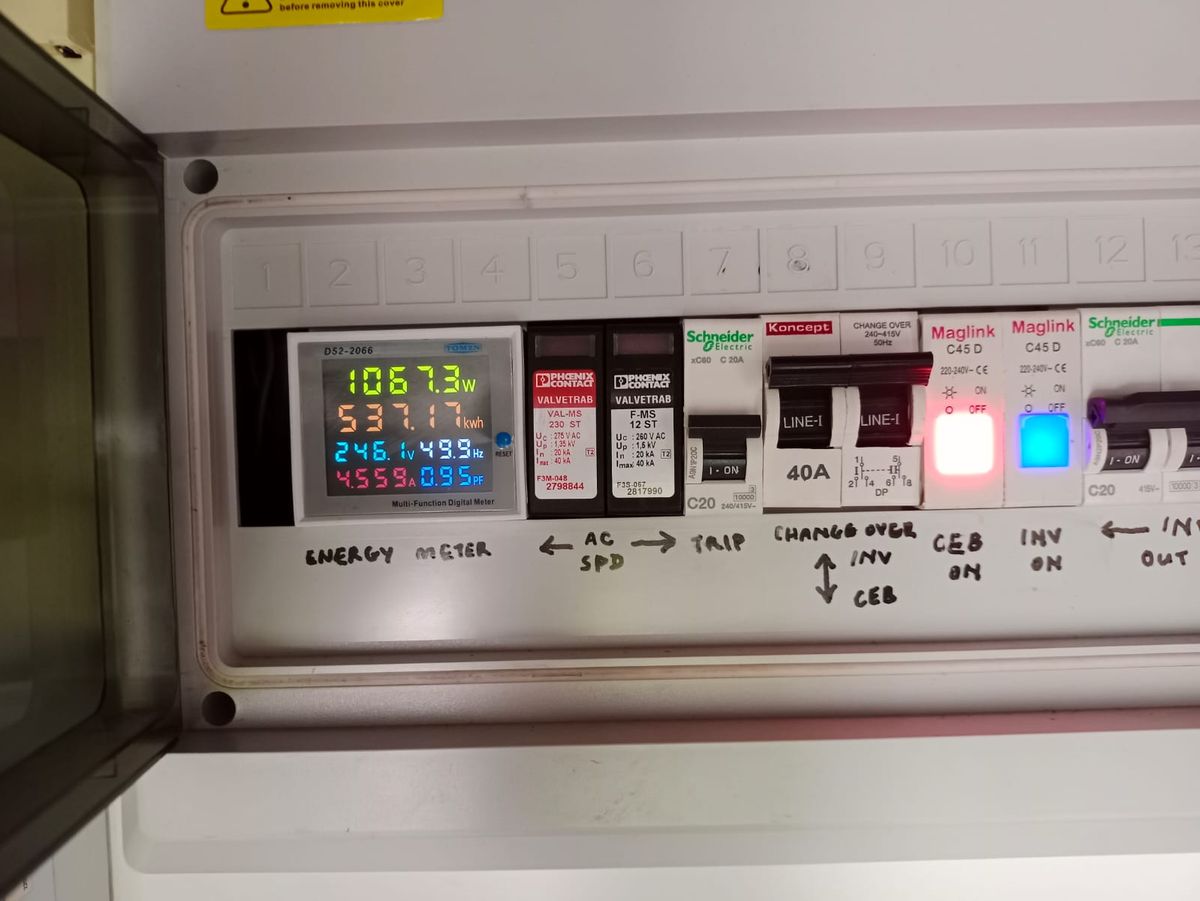
Distribution board labelled by hand so the owner can identify the changeover, meter and inverter switches

Monitoring is only worth having if somebody acts on it

A school's supply, written up so it could be argued

After commissioning a 20 kW system at a school with its own transformer, we logged the supply for four days. Undervoltage and three-phase unbalance appeared through daylight hours and vanished after dark — solar export backfeeding the transformer, worsened by its tap setting. We put the alarm logs and a root-cause statement in writing so the school could take a documented case to its utility instead of an anecdote.
A fault chased back to the manufacturer

When a customer was supplied the wrong inverter model, we raised the complaint with the manufacturer ourselves. The same customer received a low-voltage ride-through configuration report against the SLSEA reference, so their compliance was documented rather than assumed.

A starting battery nobody had wired to charge

On a standby generator survey we found the controller was flattening its own starting battery because no float charger had been fitted — the reason so many generators are found with the battery disconnected, unable to start themselves at all. The fix was wiring, not a new panel.

In writing

What our maintenance agreement commits us to

These come from the maintenance section of the agreement we ask customers to sign, so you can hold us to them.

Six-hour response

We respond to a reported hardware breakdown within six hours.

On site within three working days

An authorised person attends within three working days of the report. Attendance beyond the agreed scope is chargeable at the rate written in your agreement.

Five working days where we hold the part

Where the failed part is one we stock, we aim to resolve within five working days. Where it is not, the time is the manufacturer's, and our agreement says so rather than promising a date we cannot keep.

Ten years of monitoring

Daily monitoring with alarms for significant deviations from expected performance, for the term of the maintenance agreement.

Your rights, in our own contract

Our agreement ends with a section telling you how to complain about us — pointing at the Sustainable Energy Authority Act No. 35 of 2007 and the PUCSL consumer complaint route. We would rather you knew.

The annual inspection, and what it is for

A solar system fails quietly. The annual inspection is how the slow problems are found — and it is priced in your agreement rather than quoted after we find something.

  • Thermal imaging to find hotspots before they become failures
  • I-V curve tracing to measure what each string is really producing
  • EL testing for cell damage invisible to the eye
  • A review of the past year's production data
  • Recalibration of monitoring equipment
  • Panel cleaning
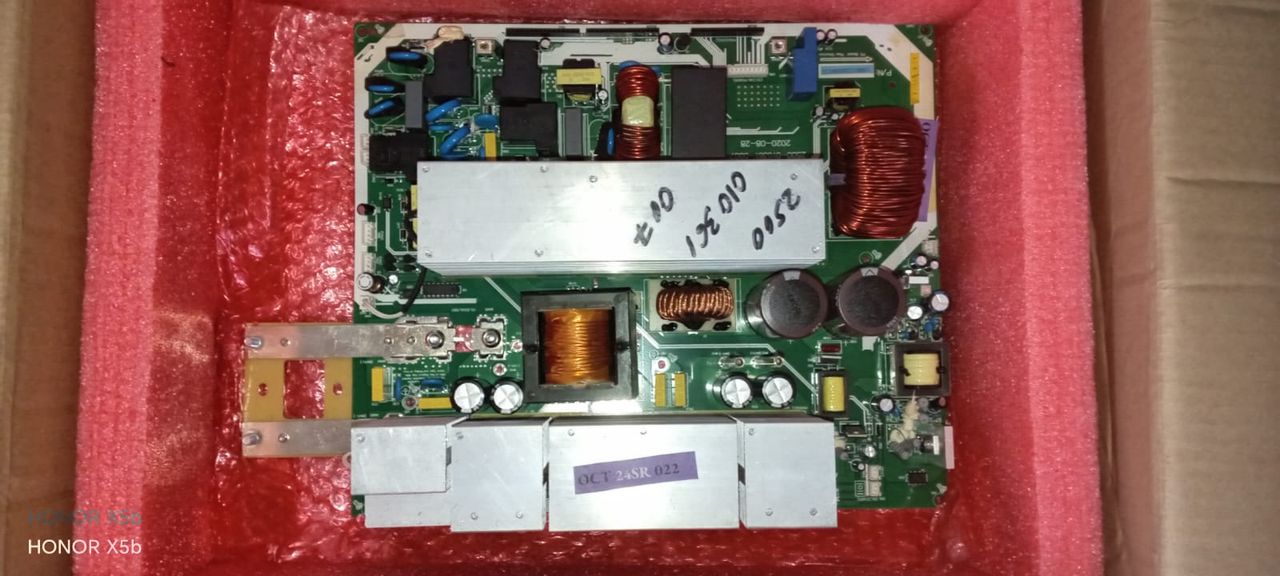
An inverter power board on the bench during fault diagnosis

We will look at a system we did not install

Plenty of our service work is on other companies' installations — including ones whose installer has disappeared. We diagnose to board level before recommending a replacement, because a fault traced is a repair and a fault assumed is an invoice.

Service

Need someone to look at an existing system?

Tell us what it is doing — or not doing. It does not matter who installed it.

This enquiry is for

Opens WhatsApp with your details filled in. Your enquiry is sent when you press send there.

We use your number only to discuss your enquiry. No marketing lists, no sharing.